Loading...
Serving West Palm Beach, FL and surrounding areas. (728) 226-6069
 West Palm
Beach Lanai Sunrooms & Patios
West PalmBeach Lanai Sunrooms & Patios
West PalmWest PalmMost sunroom problems start on the drawing board, not during construction. Good design means a room you actually use year-round - not one you abandon when summer arrives.
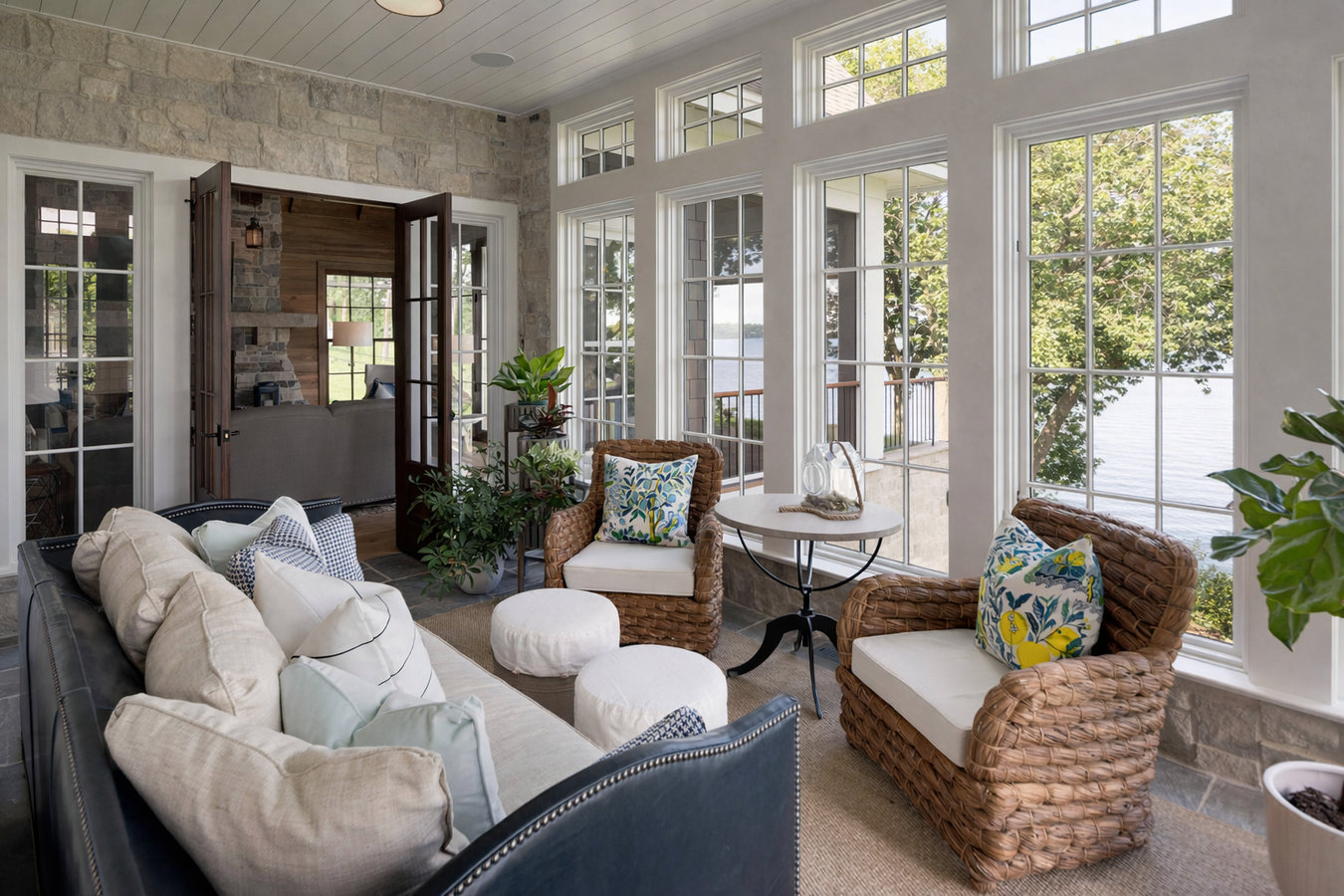
Sunroom design in West Palm Beach covers everything from the initial site visit to finalized drawings ready for Palm Beach County permitting, with most design consultations taking one to two visits and the full permit process running two to six weeks.
A lot of homeowners come to us after watching their screened porch sit empty from May through October. The problem is usually not the construction - it is the original design. A sunroom that faces west without proper glass and shade will bake in the afternoon sun no matter how well it is built. Orientation, glass selection, and connection to your home's cooling system are decisions that get made on paper, and getting them right is exactly what a proper design process does. Homeowners thinking about a fully custom layout can also look at our custom sunrooms page to understand how the build side of the project works.
West Palm Beach homes present specific design challenges - flat lots with drainage concerns, HOA architectural review requirements in many neighborhoods, and the need for hurricane-rated framing and glass throughout. Design work that ignores these realities creates problems during permitting or during the first storm season. A contractor who knows this area will address each of those factors during the design phase, not after the permit application comes back with questions.
If your patio or screened porch sits empty for most of the year because the heat and humidity make it unbearable, a properly designed, air-conditioned sunroom solves that at the root. West Palm Beach summers are genuinely intense, and a screened enclosure simply cannot compete with a fully conditioned space when the heat index is above 100 degrees. A sunroom lets you enjoy the light and the view without the misery.
If you notice water on the floor after a summer thunderstorm, or the room feels noticeably hotter than the rest of the house, your existing enclosure is not doing its job. West Palm Beach gets some of the heaviest rainfall in the state, and a room that leaks is not just uncomfortable - it is a slow source of mold and structural damage. A redesigned space with proper sealing and hurricane-rated glass solves the problem at the root.
If your family has outgrown your home but you love your neighborhood, a sunroom addition can add meaningful usable square footage without the cost and disruption of a full interior renovation. Many West Palm Beach homeowners use sunrooms as year-round family rooms, home offices, or breakfast rooms that feel connected to the outdoors without the weather getting in.
In Palm Beach County's real estate market, a permitted, well-designed sunroom that adds genuine square footage and blends with the home's architecture can be a meaningful selling point. If you are thinking about listing in the next few years and your property has space for an addition, now is a good time to explore what a sunroom would cost and what it might return. Unpermitted additions can complicate a sale and sometimes need to be disclosed or removed.
Every design project starts with a site visit where we assess your property's orientation, drainage conditions, roofline attachment points, and any HOA restrictions that apply to your community. From there we work through size, shape, glass selection, and how the room connects to your existing cooling system - because those decisions have the biggest impact on how comfortable the finished space will be. Homeowners who want to see how these design choices translate into a finished product built with vinyl framing can explore our vinyl sunrooms page for detail on materials and construction.
We prepare the full permit package for Palm Beach County Building Division submission - including any structural drawings required for wind-load compliance - and we put together HOA architectural review packages for homeowners in association-governed neighborhoods. The National Fenestration Rating Council publishes performance ratings for the glass we specify, so you can see exactly how much solar heat each option blocks before you commit. Homeowners who want to go further and have the entire room built to a fully custom specification can review our custom sunrooms service for what that process looks like.
We assess which direction your home faces, where the sun falls at different times of day, and what the optimal room placement looks like for year-round comfort.
We work through the room's footprint, ceiling height, door and window placement, and how the space connects to the rest of your home.
For homes in West Palm Beach, low-emissivity glass is the baseline - we walk you through rated options so you can compare heat-blocking performance before choosing.
Every design includes framing and glazing specifications that meet Palm Beach County's wind-load requirements - a requirement that applies to all permitted additions here.
We compile all drawings, specifications, and engineering documents needed for the Palm Beach County Building Division permit application.
Architectural drawings and material schedules formatted for your homeowners association's review committee, so HOA approval and the county permit move forward in parallel.
West Palm Beach receives over 230 sunny days a year and a summer heat index that regularly climbs above 100 degrees. A design copied from a cooler climate will create a room you cannot use for half the year. The most important decisions - which direction the room faces, what glass is used, and whether the space ties into your home's air conditioning - all flow from understanding this climate. In older neighborhoods like El Cid and Flamingo Park, tying a new addition into an older roofline or foundation also requires hands-on assessment that general design templates simply cannot provide. Homeowners in Lake Worth Beach and throughout West Palm Beach face the same permitting process, the same HOA approval requirements, and the same need for hurricane-rated construction.
Palm Beach County's permitting process also enforces wind-load standards that are stricter than most of the country, and HOA architectural review requirements affect a large share of neighborhoods - particularly gated communities and planned developments throughout the western corridor of the city. A design that does not account for both of those realities will slow down or stall your project. Because we work here regularly, we know what the building department reviewers look for and what most HOA review committees typically require, and we build that knowledge into the design package from the first draft.
We ask a few basic questions about what you want to use the space for, roughly where on your property you are thinking, and whether you have any HOA restrictions. You do not need to have all the answers - just a general sense of what problem you are trying to solve. We respond to all inquiries within one business day.
We visit your home to measure the space, assess the sun's path across your property, and look at roofline attachment points and drainage conditions. You leave this meeting with a clear picture of what is possible and a realistic cost range before any drawings are made.
We produce a formal design and written proposal. If your neighborhood has an HOA, this is when we prepare the architectural submission package. Do not sign a construction contract until you have HOA approval in writing, because the association may require design changes that affect the scope and cost.
We file the permit application with Palm Beach County on your behalf - this is included in the project scope, not an extra charge. Permitting typically takes two to six weeks. Once the permit is approved, construction on a typical sunroom addition runs two to four weeks.
Free on-site consultation. We handle the permit and HOA paperwork.
(728) 226-6069Every design we produce specifies framing, anchoring, and glazing that meet Palm Beach County's hurricane wind requirements. This means the permit application goes in complete the first time, and there are no costly redesigns after the building department reviews the drawings.
A large portion of West Palm Beach neighborhoods require HOA architectural approval before a permit can be filed. We prepare the drawings and material schedules in the format most local review committees require, so HOA approval and county permitting move forward on parallel tracks instead of sequentially.
The National Fenestration Rating Council rates glass by its solar heat gain coefficient - a number that tells you how much heat comes through the window. We explain these ratings in plain language and show you what each option means for your comfort in July, not just in January. That conversation happens during design, not after construction.
Many homes in established West Palm Beach neighborhoods like Northwood and El Cid were built in the 1950s through 1970s. Tying a new addition into an older roofline or foundation requires hands-on assessment. We conduct that evaluation during the site visit and include any necessary structural considerations in the design before the permit is filed.
Good sunroom design is the difference between a room you use every day and a room you regret. We bring local permitting knowledge, climate-specific material guidance, and real experience with the homes and HOA processes in this area - so the project goes smoothly from drawing board to final inspection.
Once your design plan is complete, vinyl framing is a low-maintenance construction path well suited to West Palm Beach's humidity and salt air.
Learn MoreFor homeowners who want full creative control over materials, layout, and finishes, custom sunroom builds go beyond standard configurations.
Learn MorePermit slots fill up during the busy season - reach out now to lock in your consultation.